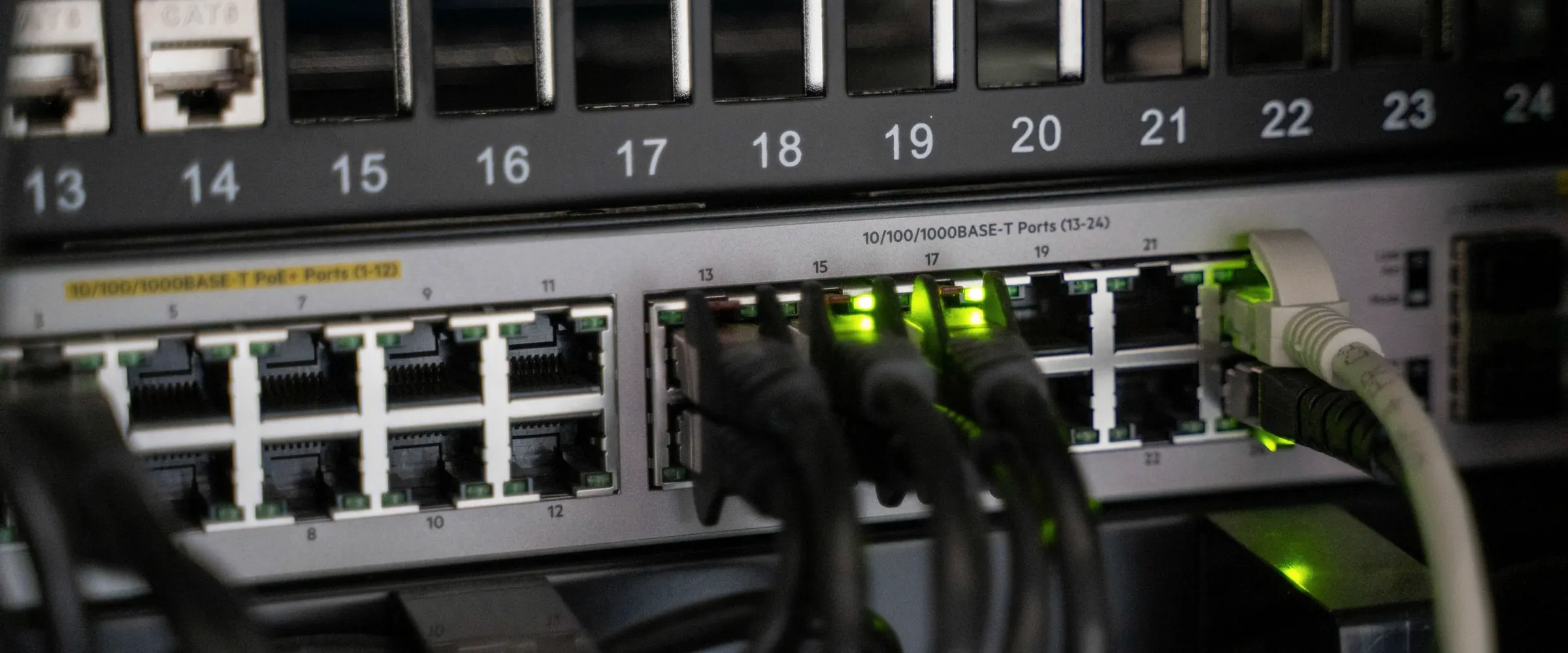
Routing and switching installation and troubleshooting: Routed and switched networks, built right and kept running.
Our engineers install, configure and troubleshoot routers and switches across the campus, data center and WAN. You get clean cutovers, validated routing and hardened configurations your team can support.
- Where we work
- Campus · Data center · WAN
- Key protocols
- OSPF · BGP · VXLAN EVPN
Outcomes
A routed and switched core you stop worrying about
Routing and switching faults rarely announce themselves clearly. We build and maintain networks so they fail less often, and so faults are quick to find when they do occur.
-
01
Short, predictable maintenance windows
Pre-staged configurations, tested software images and step-by-step procedures mean installs and cutovers run to plan, with a clear rollback point if something unexpected appears.
-
02
Root cause, not guesswork
Structured, layer-by-layer troubleshooting with packet captures, device logs and NetFlow or IPFIX data finds the actual fault instead of rebooting around it.
-
03
Consistent, hardened configurations
Every device is built from a configuration standard and hardened in alignment with CIS Benchmarks and DISA STIGs, so weak defaults and drift do not build up.
What we deliver
Install, configure, troubleshoot and harden
Engage us for a single change, a site refresh or the full lifecycle of your campus, data center and WAN. The scope below is typical; we confirm it in writing before work starts.
Installation, upgrades and migration
New hardware in, legacy hardware out, with no loose ends.
- Campus, data center and WAN edge installs, verified against the port map
- Pre-staging and burn-in of configurations before hardware ships to site
- Switch stacks, modular chassis and redundant supervisors
- Migrations from legacy hardware, including moves between platforms
- Software upgrades with compatibility checks and a tested rollback image
- Interface, VLAN and routing parity checks before cutover
Routing, switching and fabrics
Layer 2 and Layer 3 built to a documented standard.
- OSPF and BGP with route filtering, summarization and authentication
- Static and policy-based routing, with redistribution at defined points
- VLANs, 802.1Q trunks and STP, RSTP or MST with root guard and BPDU guard
- LACP link aggregation and multi-chassis link aggregation pairs
- VRRP or HSRP first-hop redundancy with object tracking
- VXLAN EVPN spine-leaf fabrics for the data center
- QoS classification, marking and queuing for voice and video
- NetFlow or IPFIX export, SNMPv3, syslog and NTP
Structured troubleshooting
Evidence first, from the physical layer up.
- Layer-by-layer isolation from interface errors to routing adjacencies
- Packet capture with port mirroring and on-box capture tools
- Spanning-tree loops, unidirectional links and duplex mismatches
- Route flaps, asymmetric paths and MTU problems
- High CPU and memory analysis, including control-plane traffic
- Written root-cause summary with corrective actions
Standards, hardening and documentation
Secure baselines your team can support.
- Configuration standards and templates for every device role
- Hardening aligned to CIS Benchmarks and DISA STIGs
- AAA with TACACS+ or RADIUS, SSHv2 and role-based privilege
- Management-plane protection: access lists, control-plane policing and unused services disabled
- Security advisory review and end-of-support planning
- As-built configurations, diagrams, port maps and a change-diff archive
How we work
Baseline, stage, cut over, prove it
Every project follows the same four steps, whether it is one switch stack or a data center fabric.
-
01
Survey and baseline
We capture running configurations, software versions, neighbor and route tables, and interface counters. That baseline is what we validate against later.
-
02
Stage and test
Configurations are built from your standards, images are loaded and critical features are tested on staged hardware before anything reaches site.
-
03
Install and cut over
We rack, cable and migrate in the agreed window, following a method of procedure with checkpoints and a defined rollback trigger.
-
04
Validate and hand over
We compare results against the baseline, test failover, then deliver as-built configurations, diagrams and a support handover.
Post-change validation
The checks that close a change are the same ones that opened it, so before and after compare line for line.
- Software versions match the change planPASS
- No error-disabled, flapping or erroring interfacesPASS
- Link aggregation bundles up, every member activePASS
- Spanning-tree root where the design puts itPASS
- OSPF adjacencies and BGP sessions restoredPASS
- Route tables and prefix counts match the baselinePASS
- First-hop redundancy active on the intended peerPASS
- Failover tested and device logs reviewedPASS
Where it fits
From a single closet to the data center
Built for government agencies, regulated enterprises and companies in the USA and internationally, delivered on-site or remote.
-
Government facilities
Standardized, hardened builds with documented baselines that support your security assessments.
-
Regulated enterprises
Hospitals, financial firms and other sites where every routing or switching change must be scheduled, documented and reversible.
-
Multi-site refreshes
Branch and campus hardware staged centrally, then installed site by site from the same configuration standards.
-
Data center and hybrid
VXLAN EVPN spine-leaf fabrics, plus WAN edge routing and QoS for a distributed workforce.
Protocols, standards and tooling
Routing and redundancy
- OSPF
- BGP
- Static routing
- Policy-based routing
- VRFs
- BFD
- VRRP
- HSRP
- QoS / DiffServ
Switching and fabrics
- 802.1Q VLANs
- STP / RSTP / MST
- LACP
- MC-LAG
- VXLAN
- BGP EVPN
- Spine-leaf
Operations and security
- NetFlow / IPFIX
- SNMPv3
- Syslog
- NTP
- TACACS+
- RADIUS
- SSHv2
- Control-plane policing
- CIS Benchmarks
- DISA STIGs
Platform experience: Cisco Catalyst, Nexus and ISR/ASR platforms
Common routing and switching questions
Have a question that is not here? Ask an engineer.
Yes. We troubleshoot and stabilize the equipment you run today, including platforms nearing end of support and networks that mix vendors. Because the work is built on open standards, we can plan a replacement in stages when it makes sense.
Call us and describe the symptoms. We work the problem remotely or on-site, starting with physical and data link checks and moving up the stack, then document the root cause and the fix.
When a data center needs Layer 2 segments stretched across racks or rooms, clean multi-tenant segmentation, or growth beyond what spanning tree handles well. For a small server room, a well-built collapsed core is often simpler to run, and we recommend the simpler design when it meets the requirement.
Yes. We harden devices in alignment with CIS Benchmarks and DISA STIGs, adjusted to your requirements, and document each deviation with the reason for it. Software upgrades follow the same discipline: advisories reviewed, images tested and a rollback image in place.
Related services
Work that pairs with routing and switching

Network Design & Engineering
Assessments, high- and low-level designs and the documentation behind a stable network.
Network Access Control
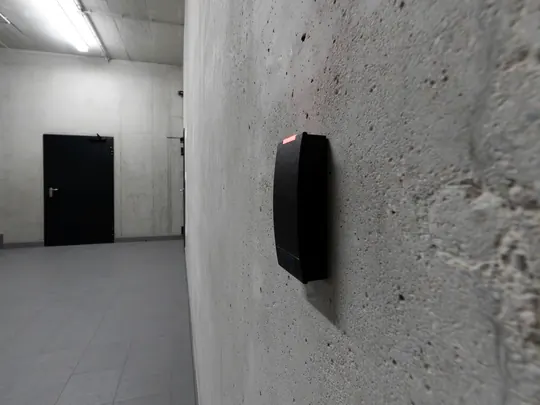
802.1X, MAC authentication and identity-based access policy on the switches we deploy.
Structured Cabling & Infrastructure
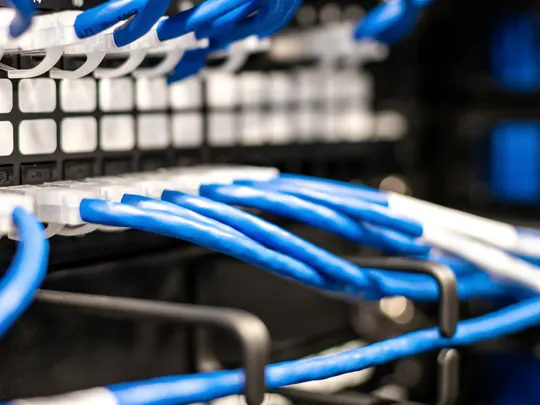
Racking, fiber, patch panels, cable management and labeling, installed and tested.
Get in touch
Let's talk about your network.
Tell us where you are today. A senior engineer will respond with practical next steps, not a sales script.