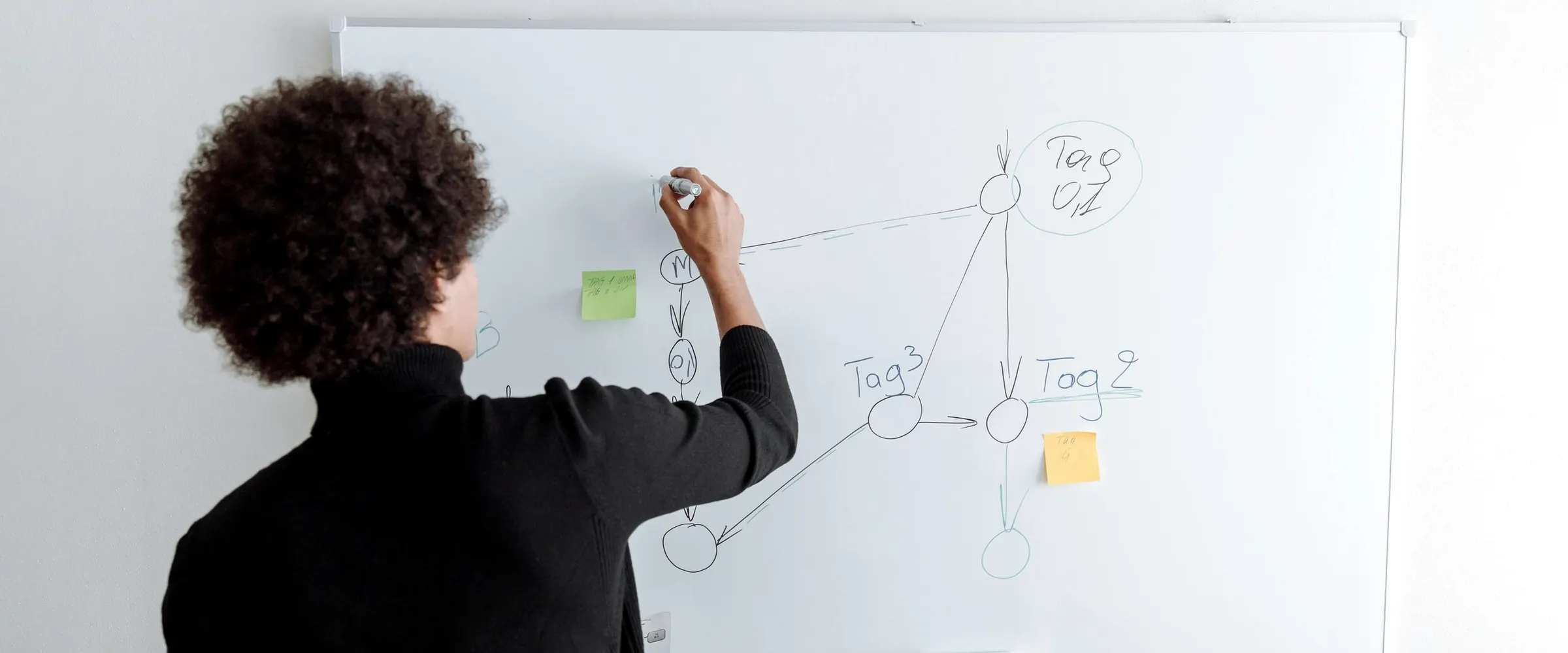
Network design, engineering & administration: Network architecture built to be operated, not just drawn.
We assess what you have, design what you need and document every decision. Campus, data center, WAN and SD-WAN architectures with the segmentation, redundancy and runbooks that keep them stable long after cutover.
- Scope
- Campus, data center, WAN, SD-WAN
- Delivery
- On-site and remote
- Team experience
- Engineering since 2009
Outcomes
What changes when the design is right
Good architecture shows up as fewer outages, faster changes and audits that go smoothly. These are the results we design for from the first whiteboard session.
-
01
A network everyone can read
Current diagrams, high- and low-level designs and naming standards give engineers, auditors and leadership the same accurate picture of the network.
-
02
Failures that stay contained
Redundant paths, first-hop redundancy and deliberate failure domains keep a single device or link fault from becoming a site-wide outage.
-
03
Changes without surprises
Standard configurations, peer-reviewed change plans and tested rollback steps turn routine work into predictable, low-risk maintenance.
What we deliver
Concrete scope, from assessment to daily administration
Every engagement ends in working infrastructure and documents your team keeps. Take the full lifecycle or only the phase you need.
Discovery and assessment
- Inventory of devices, circuits, software versions and support status
- Topology discovery from CDP/LLDP, routing tables and configuration review
- Utilization and error baselines from SNMP and NetFlow data
- Risk register: single points of failure, end-of-life hardware, configuration drift
- Prioritized recommendations and a phased roadmap
Architecture and design
- HLD covering requirements, topology and failure domains; LLD with port maps and per-role configurations
- Campus, data center spine-leaf, WAN and SD-WAN architectures
- Segmentation with VLANs, VRFs and firewall zone boundaries
- IP addressing, VLAN and routing plans with OSPF areas, BGP policy and summarization
- Redundancy and HA: dual-homed uplinks, HSRP/VRRP, LACP and diverse circuits
Documentation and change control
- Physical and logical diagrams kept as living documents
- Configuration standards and golden templates for each device role
- Runbooks for routine operations, failover and recovery
- Method of procedure for every change, with pre-checks, validation and rollback
- Work scheduled through your change advisory process
Ongoing administration
- Scheduled configuration backups with change diffs
- Software lifecycle: advisory review, upgrade planning and end-of-life tracking
- Capacity planning from utilization trends
- Moves, adds and changes made against the published standards
- Periodic design reviews as the organization grows
Typical artifacts
- Current-state assessment report
- High- and low-level design (HLD, LLD)
- IP addressing, VLAN and routing plan
- As-built diagrams and runbooks
Designed with compliance frameworks in mind
Designs account for frameworks like NIST SP 800-53, NIST CSF, CMMC, HIPAA and PCI DSS: isolated segments for sensitive systems, restricted management-plane access, centralized logging and documented configuration baselines that support your assessments.
How we work
Four phases, each with a signed-off deliverable
Nothing moves to the next phase until your team has reviewed the output. You always know what was decided, why, and what comes next.
-
01
Discover
Stakeholder interviews, site walks and data collection. We map what exists, how it is used and where it is fragile.
Output: current-state report
-
02
Design
HLD first, then LLD, reviewed with your engineers. Addressing, routing, segmentation and redundancy are decided and written down.
Output: HLD · LLD · IP plan
-
03
Implement
Staged builds and cutovers in agreed windows. Every change follows a method of procedure with validation and rollback steps.
Output: MOPs · as-built configurations
-
04
Operate
Handover with training and runbooks, then ongoing administration if you want it: backups, lifecycle and capacity kept current.
Output: runbooks · as-built diagrams
Where it fits
Built for environments where downtime has consequences
Built for government agencies, regulated enterprises and companies in the USA and internationally, with engineers on-site and remote.
-
Government agencies
Clear segmentation, controlled management access and thorough documentation. Our engineers bring experience from network projects supporting US and NATO initiatives in Afghanistan.
-
Regulated enterprises
Healthcare, finance and other sectors where patient, cardholder or other sensitive data must sit in isolated segments and every change must be traceable.
-
Multi-site organizations
Standard site designs, templated WAN and SD-WAN edges and a consistent addressing scheme, so each new location deploys the same way.
-
Hybrid and remote work
Data center and cloud connectivity, remote access and internet breakout designed for users who are rarely in the office.
Protocols and standards we design with
Routing
- OSPF
- BGP
- EIGRP
- IS-IS
- VRF-Lite
- MPLS L3VPN
- Route summarization
Switching and data center
- 802.1Q VLANs
- RSTP / MST
- LACP
- MLAG
- Spine-leaf
- EVPN-VXLAN
- ECMP
WAN and resilience
- SD-WAN
- DMVPN
- IPsec
- QoS / DSCP
- HSRP
- VRRP
- BFD
Services and operations
- IPv4 / IPv6 addressing
- DHCP · DNS · NTP
- SNMPv3
- NetFlow / IPFIX
- Syslog
- TACACS+ / RADIUS
- IPAM
Common questions
Have a question that is not here? Email hello@arpgate.com and an engineer will answer.
Yes. We validate what is documented against the running network using device configurations, routing tables and neighbor discovery, and we correct the record before any design work begins.
No. We design to requirements first, using open standards wherever they meet the need. Our engineers work hands-on with the major enterprise routing, switching, firewall, access control and wireless platforms, and our design documents call out where a feature is vendor-specific so you keep your options open.
Every change has a method of procedure: pre-checks, exact steps, validation commands and a rollback plan. We work inside your maintenance windows and follow your change advisory process.
Yes. We can take on ongoing administration, from configuration backups and software lifecycle to capacity planning, or hand over to your team with runbooks and training. For a continuing arrangement, see managed network services.
Related services
Carry the design into the build
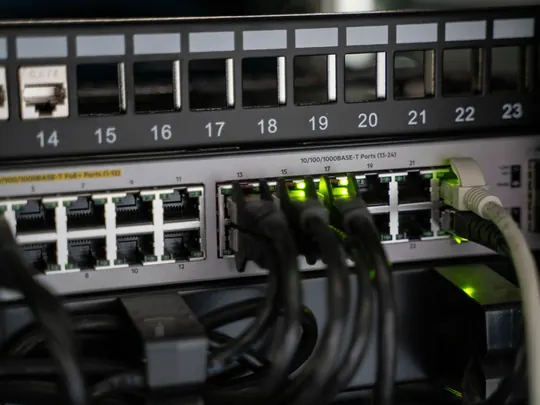
Routing & Switching
Installation, configuration and troubleshooting of enterprise routers and switches across campus, WAN and data center.
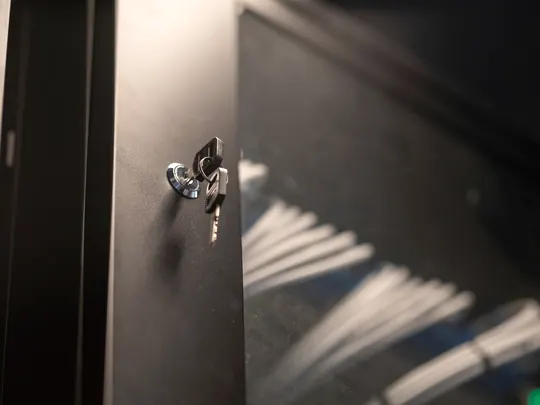
Next-Generation Firewalls
Next-generation firewall deployment, segmentation and centralized policy management.
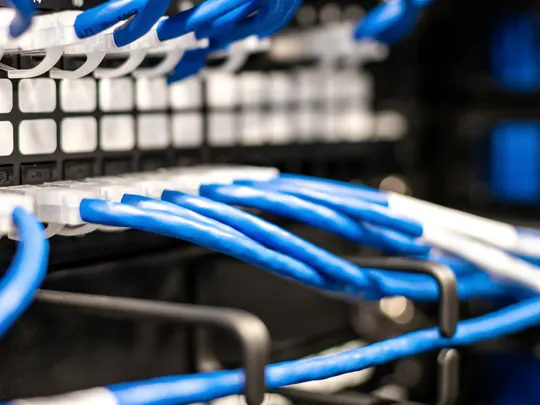
Structured Cabling & Infrastructure
Racking, fiber, patch panels, power and labeling, installed and tested to match the design.
Get in touch
Let's talk about your network.
Tell us where you are today. A senior engineer will respond with practical next steps, not a sales script.