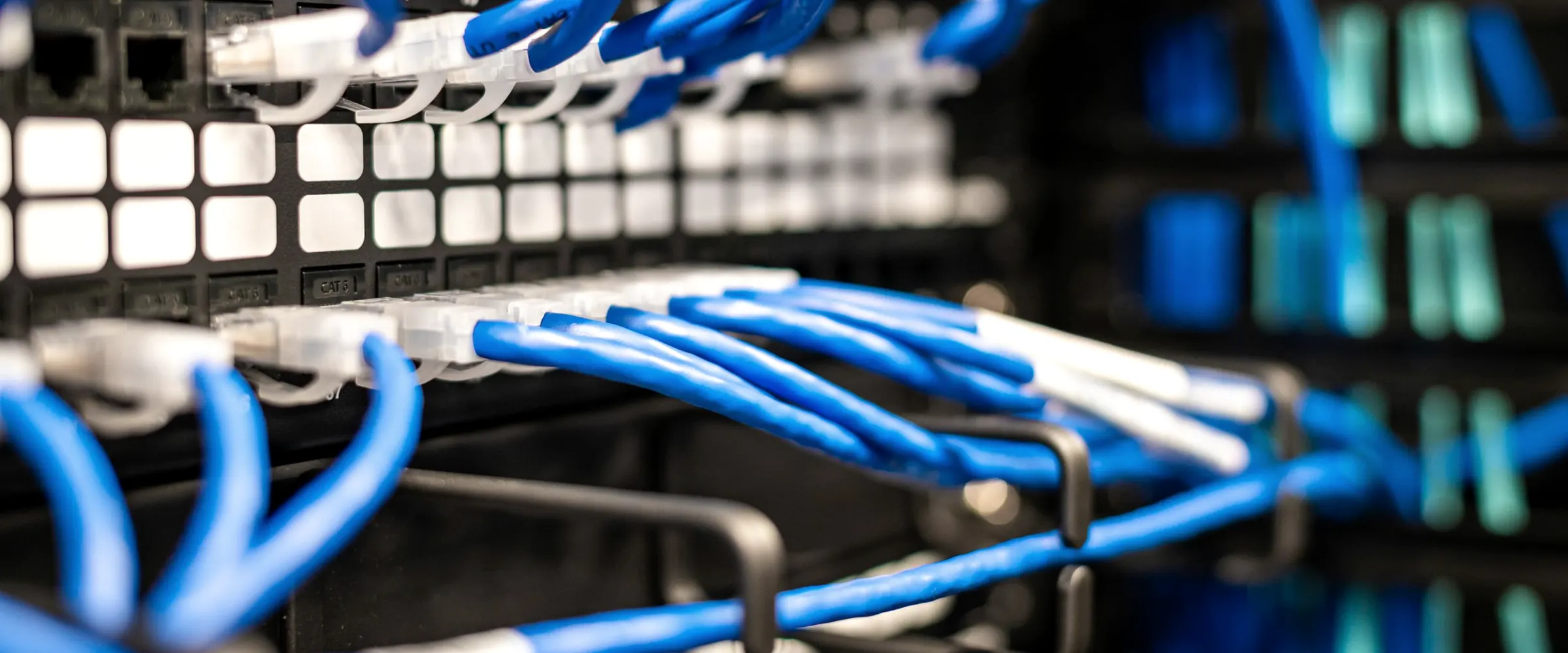
Structured cabling & network infrastructure installation: Clean, tested infrastructure your network can stand on.
Arpgate installs the physical layer: racks, wall jacks, patch panels, access points, fiber and equipment power connections. Every link is labeled, certified and documented, so your closets stay organized and audit-ready.
- TIA-568 certification testing
- TIA-606 style labeling
- As-built documentation
Outcomes
The physical layer, done right the first time.
Most network problems that are hard to find start in the closet. We build the foundation so the equipment on top of it can do its job.
-
01
Closets you can audit and work in
Dressed cabling, right-length patch cords, labeled panels and clear airflow. Your team can trace any link without guesswork.
-
02
Links proven before handover
Every copper and fiber link is tested against TIA-568 limits for its category, with saved results for your records.
-
03
Documentation that matches reality
As-built drawings, rack elevations, port maps and TIA-606 style labels, so every future move, add and change starts from facts.
What we deliver
Everything between the wall plate and the core.
Scope covers new installations, expansions and clean-ups of existing spaces. Work is performed by our team on site, in line with US regulations and your facility's access rules.
Survey and planning
- Site surveys of telecom rooms, ceilings, pathways and wall construction
- Outlet counts and locations marked on floor plans
- Rack elevations, patch panel layouts and cable routes
- Pathways with J-hooks, ladder rack and cable tray, separated from EMI sources
- A labeling scheme agreed before work begins
Racking and closets
- 2-post and 4-post racks and wall-mount cabinets, anchored and leveled
- Equipment racking on rails or shelves with front-to-back airflow
- Horizontal and vertical cable managers and blanking panels
- Rack bonding coordinated with your facilities team, following TIA-607
- Re-dressing of existing closets and removal of abandoned cable
Copper, jacks and access points
- Cat 6 and Cat 6A horizontal cabling, plenum or riser rated as code requires
- Wall jacks, faceplates and surface-mount boxes
- Patch panel installation and termination to T568A or T568B
- Access point mounting on ceiling grid, hard ceilings and walls, per the RF design
- Drops for PoE endpoints such as cameras, phones and sensors
Fiber connectivity
- Single-mode (OS2) and multimode (OM3/OM4) backbone and riser links
- Fiber enclosures, adapter panels and LC or MPO connectivity
- Pre-terminated trunks where the design calls for them
- Routing that respects bend radius, with innerduct where needed
- Polarity verified end to end
Power, labeling and organization
- Equipment connected to existing rack PDUs and UPS units
- A and B feeds for dual power supply devices
- Power cord routing, retention and labeling
- TIA-606 style labels on both cable ends, panels, jacks, racks and PDUs
- Hook-and-loop bundling, color-coded patch cords and service loops
Testing and documentation
- TIA-568 certification of copper permanent links: wire map, length, insertion loss, NEXT and return loss
- Fiber insertion-loss testing, with OTDR traces where specified
- Native tester files and PDF reports for every link
- As-built floor plans, rack elevations and port maps
- Closet photos, final walkthrough and punch-list closure
A clear line on power
We connect your network equipment to existing PDUs and UPS units, then route, retain and label the power cords. New circuits, receptacles and any electrical wiring are handled by your licensed electrician. We coordinate with them so the closet is ready on schedule.
How we work
Survey, document, install, prove.
Installation is the visible part. The planning before it and the testing after it are what make a closet last.
-
01
Walk the site
We survey telecom rooms, ceilings and pathways, confirm outlet and rack locations, and note constraints such as occupied spaces, after-hours access or escort requirements.
-
02
Design and document
Rack elevations, cable routes, the labeling scheme and a bill of materials, reviewed with you before any cable is pulled.
-
03
Install and dress
Pathways, pulls, terminations, racking, AP mounting and fiber, installed neatly with bend radius, separation and airflow respected. Work in live spaces is scheduled around your operations.
-
04
Test, label and hand over
Certification testing, final labels, as-built documentation and a walkthrough with your team. Punch-list items are closed before we call it done.
Handover package
What you keep when we leave
Labels on site match the documentation exactly, so the next engineer starts from facts.
- Certification test reports
- PDF + native
- As-built floor plans
- Outlet IDs
- Rack elevations
- Per closet
- Port and patch maps
- Panel to jack
- Fiber link and polarity records
- End to end
- Closet photos
- Final state
Where it fits
From a single closet to every site.
The same standard of work whether it is a new build-out, a refresh or a closet nobody wants to open.
-
New offices and build-outs
Cabling, racks and APs planned with your general contractor and other trades, so the network is ready on move-in day.
-
Closet clean-ups and refreshes
Tangled patching traced, re-dressed and labeled in planned windows, with abandoned cable removed and documentation rebuilt.
-
Wireless and PoE upgrades
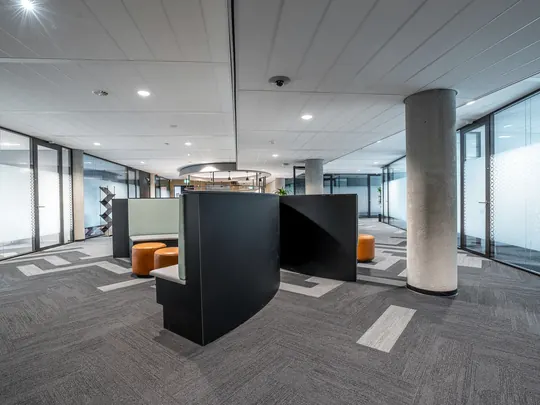
New Cat 6A drops and AP mounting for Wi-Fi 6E and Wi-Fi 7, aligned with the wireless design.
-
Government and regulated facilities
Labeling and records that stand up to inspections and audits, with work carried out under your site access procedures.
-
Multi-site rollouts
One closet standard, labeling scheme and documentation set, repeated consistently at every location.
Media, standards and tools of the trade.
Copper
- Cat 6
- Cat 6A
- U/UTP and F/UTP
- T568A / T568B
- 10GBASE-T
- PoE 802.3bt
Fiber
- OS2 single-mode
- OM3 / OM4 multimode
- LC duplex
- MPO
- Pre-terminated trunks
- Polarity methods
Standards
- ANSI/TIA-568
- ANSI/TIA-569
- ANSI/TIA-606
- ANSI/TIA-607
- Plenum (CMP)
- Riser (CMR)
Closet and testing
- 2-post and 4-post racks
- Rack PDUs and UPS
- Ladder rack
- Permanent link testing
- Insertion loss
- OTDR
Common questions about installation work.
No. We connect network equipment to existing rack PDUs and UPS units and organize and label the power cords. New circuits, receptacles and electrical wiring are done by a licensed electrician, and we coordinate with them on scope and schedule.
Copper links are certification-tested against the TIA-568 limits for their category, covering wire map, length, insertion loss, crosstalk and return loss. Fiber links get insertion-loss testing, with OTDR traces where your specification calls for them. You receive native tester files and PDF reports with the as-built documentation.
Yes. We document what is there, trace and label live links first, then re-dress in planned maintenance windows. Connections move in small, verified batches with your team, so disruption stays short and scheduled.
Yes. We mount APs to the placement and orientation in the RF design, then run and certify their cabling. We can also deliver the wireless design, configuration and validation through our enterprise wireless service.
Related services
Build on a solid foundation.
Enterprise Wireless
RF surveys, Wi-Fi 6E and 7 designs and validation for the APs we mount.
Routing & Switching
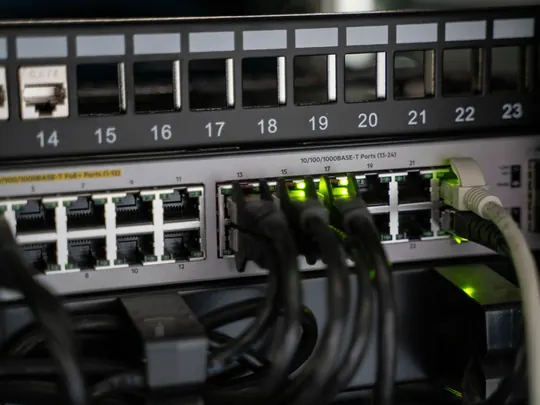
Installation, configuration and troubleshooting for the switches and routers in your racks.

Network Design & Engineering
Architecture and engineering that decide what goes into each closet and why.
Get in touch
Let's talk about your network.
Tell us where you are today. A senior engineer will respond with practical next steps, not a sales script.